Google Analytics

Tuesday, April 24, 2012

More On Cost/Benefit Analysis

We have already commented on how easy it is to warp the Benefit side of the equation using the California Bullet Train, aka the Train To Nowhere.  Now here is the other side of the equation, the Cost side.  Today's Los Angeles Times makes the point clearly.


latimes.com

Bullet train authority underestimates operating costs, study says

California taxpayers potentially will have to provide billions of dollars annually once the system is running, a group of financial experts say.

By Ralph Vartabedian, Los Angeles Times
April 24, 2012

The state rail authority has grossly underestimated future operating costs of California's proposed bullet train, meaning taxpayers potentially will have to provide billions of dollars annually once the system is running, according to an analysis released Monday by a group of outside financial experts.

The California High Speed Rail Authority's claim that its future system would generate hundreds of millions of dollars in surpluses is based on unrealistic assumptions about what it will cost to operate the network, according to the study group, which included former World Bank official William Grindley and Stanford University management professor Alain C. Enthoven.

The rail authority claims it can operate the 510-mile system at a cost of about 10 cents per passenger mile, less than one-fourth of the 40 cents to 50 cents it costs high speed rail operators in other countries, the analysis found. If California's bullet train operating costs rise to the international average, losses will range from $2 billion to $9 billion annually, according to the report.

"We are confounded by where the authority is getting its operating costs," Grindley said.

The group, which also includes Silicon Valley executives William Warren and Alan Bushell, has written a series of financial assessments of the bullet train plan that sharply question its economics. The four experts are affiliated with the Community Coalition on High Speed Rail, located in the Bay Area.
.........................................................................

Monday, April 23, 2012

Let's Hope Paul Ryan Reads This!!

This week's issue of THE WEEK has a feature about the reality of 401K plans.  Those are the ones that Paul Ryan, Eric Cantor, et al, want you to have instead of Social Security.

 And speaking of Social Security, there is one reason for keeping and improving it that no one talks about.  That is that IT WORKS.  In the 1960's every evening news report showed old people, in Florida mostly, leaving supermarkets with carts full of dog food because that was all the could afford. You don't see those stories now.  Of course Paul and Eric are too young to have ever seen those stories and their Congressional perks mean they don't ever have to give a damn about such stories.


In-depth briefing

How 401(k)s are failing millions of Americans

More than half of U.S. workers have no retirement plan at all. And even those who do have a 401(k) typically don't have enough money to retire comfortably

The average balance in America's 50 million 401(k) accounts is just over $60,000. Even people within 10 years of retirement have saved an average of only $78,000.
The average balance in America's 50 million 401(k) accounts is just over $60,000. Even people within 10 years of retirement have saved an average of only $78,000. Photo: Jamie Grill/Tetra Images/Corbis SEE ALL 13 PHOTOS
What's the case against 401(k)s?
They're failing to provide enough money for older Americans. As the country's principal way to save for retirement, the 401(k) program allows employees to set aside a portion of their paychecks, often supplemented with matching funds from their employers, and to defer taxes until they start withdrawing funds. But most of the nearly 80 million baby boomers — the oldest of whom are just now starting to turn 65 — haven't put aside nearly enough, and are in danger of exhausting their savings within a few years of retirement. "It has already become clear," said Karen Friedman, of the Pension Rights Center in Washington, D.C., "that 401(k)s have failed millions of Americans."
How much have people put aside?
The average balance in all 50 million 401(k) accounts is just over $60,000, according to the Employee Benefit Research Institute. Even people within 10 years of retirement have saved an average of only $78,000, and more than a third of them have less than $25,000. More than half of U.S. workers have no retirement plan at all. With Social Security averaging $14,780 a year for individuals and $22,000 for couples, many Americans will exhaust their savings in just a few years. Since millions of boomers are likely to live into their 70s and 80s, the country is headed toward a major crisis. "It looks like most middle-class Americans will become poor or near-poor retirees," said Teresa Ghilarducci, a retirement specialist at the New School in New York.
Why are balances so low?
The financial crisis is partly to blame. It knocked $1.6 trillion, or about a third of the total value, off the nation's 401(k) accounts. But the larger truth is that most Americans do a poor job of anticipating the future and saving money. People don't seem to grasp that the pensions their parents' generation enjoyed have been almost entirely supplanted by 401(k)s, leaving them largely on their own to fund the final stage of their lives. In one recent survey, 43 percent of workers between the ages of 45 and 54 said they weren't currently saving for retirement at all. Very few 401(k) participants contribute the annual maximum of $17,000, and people tend to stop funding their retirement — or even borrow against balances — when they change jobs or have debts to pay. Most 401(k) account holders have little knowledge of how to manage stocks and bonds over decades to produce the best returns. 
How did we come to depend so much on 401(k)s?
The Revenue Act of 1978 created 401(k)s — their name comes from the relevant subsection of the Internal Revenue Code — as a way for corporate executives to supplement their traditional pensions with extra cash. But when employers realized that they could use them to slash their pension costs by shifting the burden of retirement funding to employees, they adopted 401(k)s in droves. In 1980, 60 percent of private-sector workers with retirement plans had employer-paid pensions; by 2006, only 10 percent did, and 66 percent had 401(k)s. The chief selling points of 401(k)s are that they allow workers to take savings with them if they change jobs and to decide how — and how much — to invest in their retirement. But even automatic enrollment and free financial counseling haven't compelled people to save enough.
How much should people really be saving?
More. Far more. Many people are still assuming that they'll get 10 percent annual returns on their savings; the stock market volatility of recent years would suggest that's overly optimistic. To provide for a retirement lasting 20 years, Vanguard, a major 401(k) administrator, now recommends an annual contribution of 12 to 15 percent of income, including an employer's match. But even that is only enough if you start young: A worker who starts contributing at 35 and earns $43,000 has to sock away more than $10,000 a year, the Center for Retirement Research estimates, to maintain his or her lifestyle after retiring at 65. The Employee Benefit Research Institute says the average earner will need $900,000 upon retirement — a sum few people are on target to reach. 
So how will boomers cope?
Many will just have to keep working. They'll also have to move into cheaper housing, cut back on travel, and live with far greater financial uncertainty. "The baby boomers will be the first generation that will do worse in retirement than their parents," said the New School's Ghilarducci. That's not news to Gloria Moss. Now over 60, she has been saving in a 401(k) since 1985, but has only half what she needs. "I am going to probably have to work considerably longer than I anticipated," she said. Financial adviser Paul Merritt says most of his retirement-age clients reach the same conclusion after taking a hard look at the numbers. "The discussion turns out to be: What kind of part-time work do you want to do after you retire?" 
Skimming off the top
Future retirees don't have only themselves to blame for paltry retirement savings. Excessive management fees also play a role. Every day, Americans pay about $164 million in 401(k) fees to the financial industry. "There are enormous dollar amounts involved," said Frank Cirullo, a former plan consultant. "Employees are getting ripped off." Fees vary from plan to plan, and can run anywhere from 0.5 to 2 percent of assets per year. An extra 0.5 percent annual fee can cut an employee's savings by 10 percent by the time he's 65, according to Vanguard. Most 401(k) fees have long been hidden, but under new rules taking effect this summer, plan providers have to give detailed breakdowns of all the fees to employers, who in turn have to inform employees. Savers can only hope that transparency kicks off competition that will lower fees.
 

Sunday, April 22, 2012

This Is A Perfect Follow Up To Top Secret America.

Today's New York Times has a piece called "A Dangerous Mind" that you should really read and it is reproduced below.  In Top Secret American, Dana Priest  explains all of your rights that have been cancelled by the U.S. government in the guise of fighting terrorism.  This article details a case that the U.S. government has brought against a U.S. citizen based on  WHAT THE GUY WAS THINKING!!!!  Have you heard of the thought police?  Well, they are here and you need to understand how serious this is because one day some feds may show up at your front door to arrest you for what you were thinking!!  Don't believe that can happen?  Read on!!


April 21, 2012

A Dangerous Mind?


LATE last year, a jury in Boston convicted Tarek Mehanna, a 29-year-old pharmacist born in Pittsburgh, of material support for terrorism, conspiring to provide material support to terrorists and conspiring to kill in a foreign country, after a 35-day trial in which I testified as an expert witness for the defense. 

On April 12, Mr. Mehanna was sentenced to 17 and a half years in prison. Hearing this, most Americans would probably assume that the F.B.I. caught a major homegrown terrorist and that 17 and a half years is reasonable punishment for someone plotting to engage in terrorism. The details, however, reveal this to be one of the most important free speech cases we have seen since Brandenburg v. Ohio in 1969.
As a political scientist specializing in Islamic law and war, I frequently read, store, share and translate texts and videos by jihadi groups. As a political philosopher, I debate the ethics of killing. As a citizen, I express views, thoughts and emotions about killing to other citizens. As a human being, I sometimes feel joy (I am ashamed to admit) at the suffering of some humans and anger at the suffering of others. 

At Mr. Mehanna’s trial, I saw how those same actions can constitute federal crimes.
Because Mr. Mehanna’s conviction was based largely on things he said, wrote and translated. Yet that speech was not prosecuted according to the Brandenburg standard of incitement to “imminent lawless action” but according to the much more troubling standard of having the intent to support a foreign terrorist organization. 

Mr. Mehanna was convicted and sentenced based on two broad sets of facts. First, in 2004, Mr. Mehanna traveled with a friend to Yemen for a week, in search, the government said, of a jihadi training camp from which they would then proceed to Iraq to fight American nationals. The trip was a complete bust, and Mr. Mehanna returned home.
Some of his friends continued to look for ways to join foreign conflicts. One even fought in Somalia. But Mr. Mehanna stayed home, completed a doctorate in pharmacology and practiced and taught in the Boston area. But the Yemen trip and the actions of his friends were only one part of the government’s case.
For the government, Mr. Mehanna’s delivery of “material support” consisted not in his failed effort to join jihadi groups he never found, nor in financial contributions he never made to friends trying to join such groups, but in advocating the jihadi cause from his home in Sudbury. 

MR. MEHANNA’S crimes were speech crimes, even thought crimes. The kinds of speech that the government successfully criminalized were not about coordinating acts of terror or giving directions on how to carry out violent acts. The speech for which Mr. Mehanna was convicted involved the religious and political advocacy of certain causes beyond American shores. 

The government’s indictment of Mr. Mehanna lists the following acts, among others, as furthering a criminal conspiracy: “watched jihadi videos,” “discussed efforts to create like-minded youth,” “discussed” the “religious justification” for certain violent acts like suicide bombings, “created and/or translated, accepted credit for authoring and distributed text, videos and other media to inspire others to engage in violent jihad,” “sought out online Internet links to tribute videos,” and spoke of “admiration and love for Usama bin Laden.” It is important to appreciate that those acts were not used by the government to demonstrate the intent or mental state behind some other crime in the way racist speech is used to prove that a violent act was a hate crime. They were the crime, because the conspiracy was to support Al Qaeda by advocating for it through speech.
Much of Mr. Mehanna’s speech on Web sites and in IM chats was brutal, disgusting and unambiguously supportive of Islamic insurgencies in Iraq, Afghanistan and Somalia. In one harrowing IM chat, which the government brought up repeatedly during the trial, he referred to the mutilation of the remains of American soldiers in response to the rape of a 14-year-old Iraqi girl as “Texas BBQ.” He wrote poetry in praise of martyrdom. But is the government right that such speech, however repulsive, can be criminalized as material support for terrorism?
In the 2010 Supreme Court decision Holder v. Humanitarian Law Project, Chief Justice John G. Roberts Jr. declared that for speech to qualify as criminal material support, it has to take the form of expert advice or assistance conveyed in coordination with or under the control of a designated foreign terrorist organization. In that decision, Justice Roberts reaffirmed that “under the material-support statute, plaintiffs may say anything they wish on any topic” and pointed out that “Congress has not sought to suppress ideas or opinions in the form of ‘pure political speech.’ ” Justice Roberts emphasized that he wanted to “in no way suggest that a regulation of independent speech would pass constitutional muster, even if the Government were to show that such speech benefits foreign terrorist organizations.” 

The government’s case against Mr. Mehanna, however, did not rest on proving that his translations were done in coordination with Al Qaeda. Citing no explicit coordination with or direction by a foreign terrorist organization, the government’s case rested primarily on Mr. Mehanna’s intent in saying the things he said — his political and religious thoughts, feelings and viewpoints. 

The prosecution’s strategy, a far cry from Justice Roberts’s statement that “independent advocacy” of a terror group’s ideology, aims or methods is not a crime, produced many ominous ideas. For example, in his opening statement to the jury one prosecutor suggested that “it’s not illegal to watch something on the television. It is illegal, however, to watch something in order to cultivate your desire, your ideology.” In other words, viewing perfectly legal material can become a crime with nothing other than a change of heart. When it comes to prosecuting speech as support for terrorism, it’s the thought that counts. 

That is all troubling enough, but it gets worse. Not only has the government prosecuted a citizen for “independent advocacy” of a terror group, but it has prosecuted a citizen who actively argued against much of what most Americans mean when they talk about terrorism. 

On a Web site that the government made central to the conspiracy charge, Mr. Mehanna angrily contested the common jihadi argument that American civilians are legitimate targets because they democratically endorse their government’s wars and pay taxes that support these wars. 

Mr. Mehanna viewed Muslim attacks on foreign occupying militaries as justified but rejected the Qaeda doctrine that the civilian citizens of a foreign country at war with Muslims can be targeted. His doctrine was that “those who fight Muslims may be fought, not those who have the same nationality as those who fight.”
The centerpiece of the government’s case against Mr. Mehanna’s speech activities was a translation of a text titled “39 Ways to Serve and Participate in Jihad.” The government described this text, written by a late pro-jihad Saudi religious scholar, as a “training manual for terrorism.” It is nothing of the sort. It is a fairly routine exercise of Islamic jurisprudence explaining to pious Muslims how they can discharge what many of them believe to be a duty to contribute to wars of self-defense. 

This text does explain that in Islamic law a Muslim may “go for jihad” or “collect funds for the mujahidin.” But it also explains that, in place of fighting or sending money, a Muslim can assuage his conscience and take care of widows and children, praise fighters, pray for fighters, become physically fit, learn first aid, learn the Islamic rules of war, have feelings of enmity for one’s enemies, spread news about captives and abandon luxury. 

The act of translating this text is far from incitement to violent action. The text in fact shows Muslims numerous ways to help fellow Muslims suffering in their own lands, without engaging in violence. Instead of this common-sense reading, however, the government did something extraordinary. It used this text of Islamic law to help define for us what should count as a violation of our own material support law.
Everything Mr. Mehanna did, from hiking to praying, was given a number in the indictment based on this text as an act of material support for jihad. For example, his online discussion with a friend about working out and exercising should, in the government’s words, be “placed next to the directives in 39 Ways (Step 25: ‘Become Physically Fit’).” Federal prosecutors, in effect, used a Saudi religious scholar to tell us what our “material support” statute means.

The Mehanna case presented an excruciating line-drawing exercise. How pro-Al Qaeda is too pro-Al Qaeda, legally speaking? 

We have the resources to prevent acts of violence without threatening the First Amendment. The Mehanna prosecution is a frightening and unnecessary attempt to expand the kinds of religious and political speech that the government can criminalize. The First Circuit Court of Appeals in Boston should at least invalidate Mr. Mehanna’s conviction for speech and reaffirm the Supreme Court’s doctrines in Brandenburg and Holder v. Humanitarian Law Project. Otherwise, the difference between what I do every day and what Mr. Mehanna did is about the differences between the thoughts in our heads and the feelings in our hearts, and I don’t trust prosecutors with that jurisdiction. 

Andrew F. March is an associate professor of political science at Yale.

I added the bold face for the last paragraph to make sure you didn't miss the import here.  I don't endorse anything this guy believes in, but we all need to defend his right to believe what ever the hell he wants to believe in!!!!

Saturday, April 21, 2012

Do You Feel Safer Now???

Dana Priest is an amazing investigative reporter for the Washington Post!!  She has just written a book entitled TOP SECRET AMERICA.  You should read it because it explains two things of extreme importance to you.  One:  The rapid loss of privacy and individual rights of every American.  Two:  The incredible waste and incompetence in the U.S. government under the rubric of The War On Terrorism.

You can find two paragraphs from page 86 below.  

But first I have to make a confession.  I am in absolute awe of Dana Priest!!  Her recent work on the Veterans Administration led to a wholesale ouster of the people managing the rat infested VA hospitals, cockroaches running over the patients, the missing checks for veterans, and a whole litany of incredible incompetence.  I was so impressed and moved by her work that I sent her a dozen roses anonymously with the message, "Thank you from everyone who ever put on a uniform".

O.K., here we go................

"Looking at only government organization working at the top secret level of counterterrorism and intelligence.  Arkin (her co-author) counted twenty-one new organizations created in just the last three months of 2001, among them the Office of Homeland Security and the FBI's Foreign Terrorist Task Force.  In 2002, thirty four more organizations were created.  Some tracked weapons of mass destruction, others joined the cyberwar and collected threat tips.  Still others coordinated counterterrorism among different agencies, attempting to tame the growing information load.  Those were followed the next year by thirty-nine new organizations, from the formidable Department of Homeland Security to Deep Red, a small naval intelligence cell working on the most difficult terrorism problems.

In 2004, yet another thirty organizations were created or redirected toward the terrorism mission.  That was followed by thirty-four more the next year and twenty-seven more the year after that; twenty-four or more each were added in 2007, 2008 and 2009.  After two years of investigating, Arkin had come up with a jaw dropping 1.074 federal government organizations and nearly two thousand private companies involved with programs related to counterterrorism, homeland security, intelligence in at least 17,000 locations across the United States--all of them working at top secret classification level."

We are spending an incredible amount of money on "counterterrorism" with absolutely no positive results.


So my question is; "Do you feel safer now?"


Wednesday, April 18, 2012

Jose Jimenez, CEO of Novartis, Gives You Some Insight Into The Cost Structure Of The Health Care Industry.

Remember, this guy is running one of the world's largest pharmaceutical companies.  This interview in Business Week gives you a glimpse inside. (I added the bold face type in the story.)


Novartis's Joe Jimenez on Layoffs in Good Times

Posted on April 05, 2012
When I was named CEO of Novartis (NVS) in 2010, it raised some eyebrows. I wasn’t a scientist or a physician. I was an American. Most of my career had been in consumer packaged goods. Before I joined in 2007, I ran Heinz (HNZ) in Europe; you have to be fast in positioning your business ahead of the competition. The pharmaceutical business is much longer term. It can take 10 years to develop a drug. As soon as I became CEO, there was more distance just the very next day, even with friends. My first move was to invest in the pipeline by keeping our research and development at about 20 percent of sales. 

It was clear we needed reductions. The business was performing well, but governments around the world were being significantly affected by the debt crisis and were cutting prices in health care. I felt we had to reduce our cost base, and I wanted to do it from a position of strength. If we waited, we would have had to lay off more. I struggled with the decision. It’s part of the job, even if it’s a painful part. There was some reference in the media to unannounced layoffs, but we had communicated this internally as something that was necessary. We looked at sales and marketing, and elsewhere. Instead of one big layoff, we had pockets of reduction in 2010. Earlier this year we announced we’d have to cut about 2,000 jobs as (the blood-pressure-lowering drug) Diovan goes off patent. We’re getting costs down to invest for the long term.
Increasingly, in every part of the world, pharmaceutical companies will not be paid on the number of pills they sell but on the outcomes they produce. In the U.S., we spend about 17 percent of GDP on health care. Singapore spends 1.3 percent and gets better health outcomes. Something is very wrong. Look at obesity rates. You’re never going to lower health-care costs until you encourage healthy behavior. The second issue is a fee-based system that gives an incentive to test and test.

I’ve moved from being a highly analytical decision maker to what I call symphonic reasoning. You think about all different angles of the problem. You have to have patience, and that only comes with age and experience. I want innovation, not cost reduction, to be the signature I have. Some decisions don’t pay off for years. — As told to Diane Brady 

Tuesday, April 17, 2012

Having Said What Michael Just Said, Here Are 18 Charts You Need To See!

 http://www.businessinsider.com/nomura-us-in-the-crosshairs-2012-4#-18
I Am Not A Survivalist..................Yet!

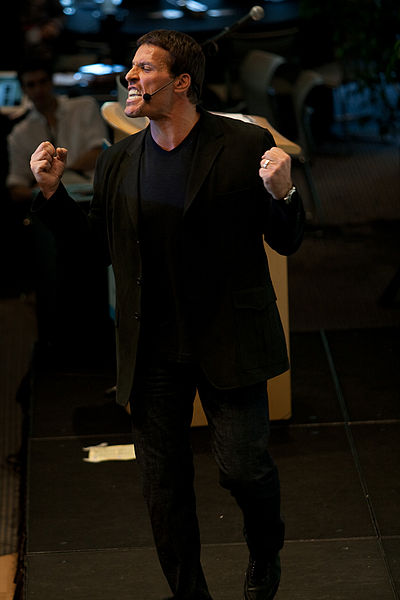
Michael, the Economic Collapse guy, has put together an impressive analysis of exactly where we are in the world of debt we have created.  Be sure to look at both videos.  Tony Robbins puts on a slightly hysterical presentation, but his numbers are accurate, and you need to understand them.  It is getting close to the time to "be afraid, really afraid!"

To get Ron Paul, click on "the video posted below" and to get Tony, click on "to watch it".


Tony Robbins, Ron Paul And Ben Bernanke All Agree: The National Debt Crisis Could Destroy America

Is there one thing that Tony Robbins, Ron Paul and Ben Bernanke can all agree on?  Yes, there actually is.  Recently they have all come forward with warnings that the national debt crisis could destroy America if something is not done.  Unfortunately, our politicians continue to spend us into oblivion as if there will never be any consequences.  When Barack Obama took office, the U.S. national debt was 10.6 trillion dollars.  Today, it is 15.6 trillion dollars and it is rising at the rate of about 150 million dollars an hour.  During the Obama administration so far, the U.S. government has accumulated more debt than it did from 1776 to 1995.  The United States now has a debt to GDP ratio of over 100 percent, and another credit rating agency downgraded U.S. debt earlier this month.  Any talk of a positive economic future is utter nonsense as long as we are bleeding red ink as a nation far faster than we ever have before.  It is absolutely immoral to wreck the financial future of our children and our grandchildren and to leave them with a bill for the greatest mountain of debt in the history of the world, but that is exactly what we are doing.  Unless our current debt-based financial system is thrown out, there are only two ways that this game is going to play out.  One would involve absolutely bitter austerity and deflation unlike anything ever seen before, and the other would involve nightmarish hyperinflation.  Either path would be hellish beyond what most Americans could possibly imagine.
Unfortunately, we are running out of time as a nation.  You know that things are late in the game when the head of the Federal Reserve starts using apocalyptic language to talk about the national debt.  The following is what Federal Reserve Chairman Ben Bernanke told Congress recently....
Having a large and increasing level of government debt relative to national income runs the risk of serious economic consequences. Over the longer term, the current trajectory of federal debt threatens to crowd out private capital formation and thus reduce productivity growth. To the extent that increasing debt is financed by borrowing from abroad, a growing share of our future income would be devoted to interest payments on foreign-held federal debt. High levels of debt also impair the ability of policymakers to respond effectively to future economic shocks and other adverse events.
Even the prospect of unsustainable deficits has costs, including an increased possibility of a sudden fiscal crisis. As we have seen in a number of countries recently, interest rates can soar quickly if investors lose confidence in the ability of a government to manage its fiscal policy. Although historical experience and economic theory do not indicate the exact threshold at which the perceived risks associated with the U.S. public debt would increase markedly, we can be sure that, without corrective action, our fiscal trajectory will move the nation ever closer to that point.
The sick thing about this is that the Federal Reserve system is actually designed to generate government debt.  The U.S. national debt is now more than 5000 times larger than it was when the Federal Reserve was created back in 1913.  So it is kind of ironic that the head of the organization that was designed to perpetually generate U.S. government debt is now warning that there is too much of it.
But Ben Bernanke is far from alone in warning about the danger of our exploding national debt.
For example, world famous motivational speaker Tony Robbins is also warning that the national debt crisis could destroy our future.
These days, most people throw around the phrase "a trillion dollars" without ever really grasping what it means.
In the video posted below, Tony Robbins uses a fun illustration to help put in perspective how large a "trillion dollars" really is.
If you had a million seconds to do something, would you consider that to be a long time?
Well, it turns out that a million seconds is only about 12 days.
What about a billion seconds?  Is that a long period of time?
Well, yes, a billion seconds is close to 32 years.  So that is definitely a lot longer than a million seconds.
What about a trillion seconds?
How long do you think that is?
Well, a trillion seconds is about 31,688 years.
So when we talk about how the U.S. government is stealing more than a trillion dollars from future generations every single year, we are talking about an absolutely massive amount of money.
The Tony Robbins video about the national debt crisis posted below has started to go viral all over the Internet.  If you have not seen it yet, I definitely recommend taking a few minutes to watch it....
So why are our politicians not doing anything about the U.S. debt crisis?
Well, it is because most of them value getting elected over and over again above doing what is right for future generations.
For the past four decades, the United States has been enjoying a 15 trillion dollar party.  All of this borrowed money has enabled us to live far, far beyond our means.
If our politicians voted to severely cut spending or to raise taxes dramatically at this point, our economy would suddenly readjust to a more realistic standard of living.  But that would be extremely painful and most Americans voters would be absolutely furious.  They would demand that someone "fix" the economy immediately.  But the truth is that what we have been enjoying all these years has not been real.  It has been bought with trillions of dollars stolen from future generations.  But most of our politicians just want to keep the party rolling as long as humanly possible so that they can keep getting voted back into office.
Fortunately, there are a few politicians that are willing to stand up and tell the truth about our national debt crisis.  For example, in the video posted below Ron Paul scolds the rest of Congress for continuing to vote for debt limit increase after debt limit increase....
Unfortunately, the American people seem to prefer politicians that endlessly lie to them about how bad things really are.
For example, back at the beginning of the Bush administration we were promised that we would be swimming in gigantic surpluses by now.
That didn't exactly work out, now did it?
Barack Obama promised us that he would cut the size of the federal budget deficit in half by the end of his first term.
Well, guess what?
He lied too.
Things just continue to get worse and worse.
Since 1975, we have added more than 15 trillion dollars to the national debt.  In fact, the U.S. national debt is now more than 22 times larger than it was when Jimmy Carter became president.
A lot of talking heads on television continue to assure us that everything is going to be okay, but the truth is that we are about to experience some absolutely devastating consequences for decades of really bad decisions.
For example, the rest of the world is rapidly losing faith in our currency and the reign of the U.S. dollar as the primary world reserve currency is in serious danger of coming to an end.  When that happens, gasoline, food and just about everything else that you buy is going to be a lot more expensive.
Already, there are very ominous signs that the rest of the world is getting tired of financing our endless spending.  In 2011, the Federal Reserve bought approximately 61 percent of all new government debt issued by the U.S. Treasury Department.  This is not supposed to happen.  The Federal Reserve is not supposed to be monetizing our debt and this is something that Congress should be looking into.
Also, at this time of the year people love to complain about the outrageous amount of taxes that most hard working Americans have to pay, but the truth is that eventually it will likely get a whole lot worse.
Just look at Greece.  Taxes in Greece have been raised to suffocating levels, government spending has been slashed to the bone and yet they are still running up more debt.
That is going to happen in the United States at some point too, especially if our leaders choose the path of austerity and deflation.
You can't hide from debt forever.
Have you ever run up debt on a credit card?
A lot of us did that when we were young and foolish, and it can be a lot of fun on the way up.
But eventually a day of reckoning comes and it is extremely painful to find yourself drowning in credit card debt.
Well, we are rapidly approaching our credit limit as a nation.
Some hard choices will have to be made, and there will be a lot of pain.
The false prosperity that we are enjoying now is going to disappear.
Now is the time to prepare for the massive economic shift that is coming.  In the coming economic environment, those that are currently living month to month and those that are 100% dependent on the system are going to be in a huge amount of trouble.
Instead of wildly spending money as if the good times will never end like most Americans are, now is the time to get out of debt, to become more self-sufficient and to set aside the money, resources and supplies you will need to weather the storm that is rapidly approaching.
Anyone with half a brain should be able to see that a gigantic economic collapse is coming.
Use the time that you still have left to prepare the best that you can.
Help Make A Difference By Sharing These Articles On Facebook, Twitter And Elsewhere:
ary2 a ver